
PRIMACYT – Cryopreserved Equine (Horse) Hepatocytes

Our Strengths
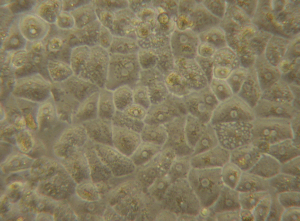
PRIMACYT is one of the pioneers in the development of advanced in vitro model systems. We are a leading company in the field of research of human and animal hepatocytes.
In 2008, we have received the Research Prize of the German Ministry of Nutrition, Agriculture and Consumer Protection for the “Development and validation of a serum-free, standardized and re-usable human hepatocyte culture system for the analysis of food, drugs and chemicals”.
PRIMACYT is approved by the European Commission as an EU Reference Laboratory for Alternatives to Animal Testing (EURL ECVAM) since 2013 and serves as a member of the laboratory network responsible for the method validation.
Main products, liver-derived and skin-derived products, are cryopreserved at the first passage stage, and the product information below clearly states the viability, recovery rate, suitable plates for culture, and test results for 3D culture.
Equine (Horse) Hepatocytes Order Information
Overview
Animal health plays an important role not only for the welfare of pets and domestic farm animals but also for animals used in food production. For the development of veterinary drugs we offer liver cells from a variety of species including dog, horse, sheep, goat, pig, poultry and fish.
A number of these animals also play an important role in environmental risk assessment of herbicides and fungicides used in crop protection. Isolated hepatocytes from ruminants, poultry and fish have increasingly become an important research tool in metabolism and bioaccumulation studies. Cost-saving test methods using hepatocyte cultures as alternatives to animal experiments will reduce the number of animal experiments and are currently introduced into OECD test guidelines.
Literature
Andrea Rasche, Felix Lehmann, Nora Goldmann, Michael Nagele, Andres Moreira-Sotoa, Daniel Nobach, Ianei de Oliveira Carneiroa, Nikolaus Osterrieder, Alex D. Greenwood, Eike Steinmann, Alexander N. Lukashev, Gerhard Schuler, Dieter Glebe, Jan Felix Drexler, and the Equid HBV Consortium: A hepatitis B virus causes chronic infections in equids worldwide. PNAS 2021 Vol. 118 No. 13, https://doi.org/10.1073/pnas.2013982118
Khaled A. Shibany, Sabine Tötemeyer, Stefanie L. Pratt & Stuart W. Paine: Equine hepatocytes: isolation, cryopreservation and applications to in vitro drug metabolism studies, Pharma Res Per, 4 (5), 2016, e00268, doi: 10.1002/prp2.268
With supporting information https://www.pnas.org/lookup/suppl/doi:10.1073/pnas.2013982118/-/DCSupplemental.
Product List
| Product Code | Lot | Sex | Inventory (vials) | Viability (%) | Recovery (Viable cells/vial) | plateable 24well | plateable 96well | 3D culture | CYP1A1/1A2 induction Xfold |
|---|---|---|---|---|---|---|---|---|---|
| EHCP | EH150225-3 | female | 21 in stock | 73.0 +/- 11.3 | > 4 Mio. | yes | no | not tested | – |
| EHCP | 250206-1 | female | 10 in stock | 93.7 | > 4 Mio. | yes | yes | no | – |
| EHCP | 250206 | female | 80 in stock | 86.9 +/- 3.3 | > 6 Mio. | yes | no | no | no |
※EHCP – Equine (horse) hepatocytes cryopreserved plateable
Please contact us for any inquiries, questions, or information requests.
Tokyo Future Style, Inc.
info@tokyofuturestyle.com
TEL:029-851-9222 FAX:029-851-9220
